
Building a Fair and Scalable Pay Architecture
In today’s dynamic and talent-driven business environment, having a clear and robust pay architecture is no longer a luxury, it’s a strategic necessity. Organisations that fail to build a consistent and transparent pay framework risk pay inequities, compliance issues, and talent
By Remunera Team • 2025-10-27 •
In today’s dynamic and talent-driven business environment, having a clear and robust pay architecture is no longer a luxury, it’s a strategic necessity. Organisations that fail to build a consistent and transparent pay framework risk pay inequities, compliance issues, and talent attrition.
Yet, many businesses still rely on ad hoc salary decisions or outdated structures that don’t scale with growth. The result? Misalignment between pay and performance, poor employee engagement, and difficulties retaining top talent.
In this article, we explore pay architecture best practices to help HR and business leaders design systems that are fair, competitive, and future-ready.
What Is Pay Architecture?
Pay architecture refers to the underlying structure and logic behind how compensation is designed, managed, and administered across an organisation. It includes elements like:
- Job families and job levels (or grades)
- Salary bands or ranges
- Position titles and conventions
- Pay progression pathways
- Market benchmarking integration
- Internal equity alignment
When built well, a pay architecture supports consistent, defensible, and scalable pay decisions.
Best Practices in Pay Architecture Design
1.
Start with a Clear Job Architecture
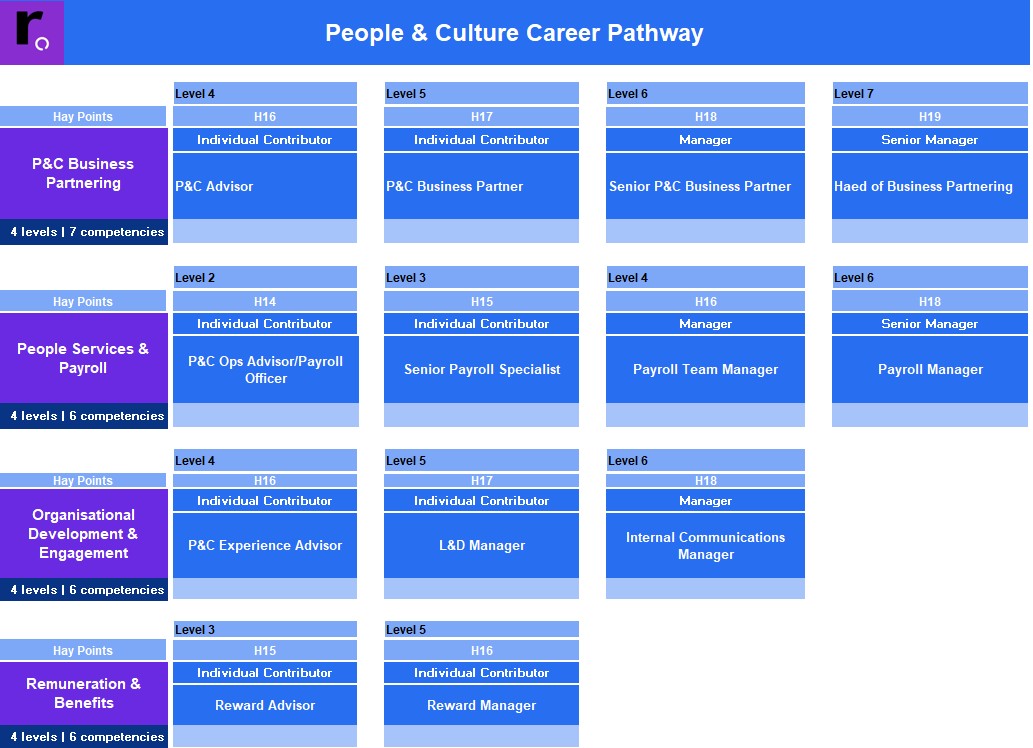
A robust pay system starts with a structured job architecture—a hierarchy of roles that defines how jobs relate to each other in terms of scope, complexity, and impact.
Best practice:
Use clearly defined job levels and job families to enable internal equity, facilitate promotions, and support workforce planning. Avoid vague or inflated job titles that can skew benchmarking and internal comparisons.
Bonus tip: A strong job architecture can increase internal promotions—our client data shows a 32% uplift in internal mobility post-implementation.
2.
Develop a Compensation Philosophy
Before you build salary bands, define your compensation philosophy. This foundational document outlines your beliefs around pay positioning, competitiveness, and performance alignment.
Questions to answer:
- Do we lead, match, or lag the market?
- How do we differentiate pay for performance?
- What role do allowances, bonuses, or equity play?
Your philosophy should guide all future pay decisions and communication.
3.
Design Salary Structures Aligned to Market and Internal Logic
Establish salary bands or ranges for each job level, informed by:
- Market benchmarking data (e.g., P50, P75)
- Internal equity comparisons
- Career pathways and skill progression
Best practice:
Ensure there’s adequate range spread (e.g., 80–120% of midpoint) and a clear progression path to avoid compression issues.
Client result: We helped a mid-sized firm increase roles within their target compa-ratio range from 57% to 82% using aligned bands and pay analytics.
4.
Integrate Pay Equity & Compliance
Build structures that can be audited and reviewed to support pay equity across gender, ethnicity, and other protected characteristics. Ensure you can explain differences in pay based on legitimate business factors (e.g., performance, tenure, location).
Best practice:
Conduct regular pay equity audits and track compa-ratios by demographic group to spot trends.
We helped one organisation reduce their gender pay gap by 15% over three years through structured pay reviews and architecture-led transparency.
5.
Create Position Title Conventions
Title inflation can be a silent killer of internal equity and benchmarking accuracy. Create a position title convention that standardises job titles across functions and levels while remaining externally relevant.
Example convention:
- Analyst → Senior Analyst → Lead Analyst → Manager → Senior Manager
- Keep internal titles simple, and adjust external-facing titles as needed for talent attraction.
6.
Make Pay Architecture Scalable
As your organisation grows, your pay framework must grow with you. Design your structure with scalability in mind:
- Can new job levels or roles be added without overhauling everything?
- Are salary bands flexible across regions or business units?
- Is your job evaluation method sustainable?
Future-proofing your architecture ensures you don’t rebuild from scratch every few years.
7.
Communicate with Transparency
Even the best pay architecture will fail if employees don’t understand it. Ensure HR, managers, and employees are trained on:
- What the job levels mean
- How salary ranges work
- What influences movement within a band
- How promotion or adjustment decisions are made
Transparency builds trust and reduces ambiguity around pay.
The Strategic Payoff
Organisations that invest in robust pay architecture see clear benefits:
- More confident and consistent pay decisions
- Stronger employee trust and engagement
- Better internal mobility and career progression
- Reduced pay gaps and risk exposure
- A foundation for variable pay, benefits, and equity design
Final Thoughts
Pay architecture is not just about structure—it’s about creating fairness, enabling growth, and supporting strategic talent decisions. By applying these best practices, your organisation can build a compensation system that is both equitable and future-fit.
Need help designing or modernising your pay architecture?
Let’s chat about how we can build a framework that supports your business and your people.
Remunera Team
Tags
Stay Informed
Get the latest insights on compensation management, salary benchmarking, and HR analytics delivered directly to your inbox.
✓ Weekly expert insights
✓ Industry trend analysis
✓ Best practice guides